644
Users engaged across 11 stakeholder and SME interviews, six front-line employee interviews, 12 moderated interviews, and a survey of AT&T and competitors' customers.
Research Participants
In 2024, AT&T had no digital path for customers moving to new homes. So we built one
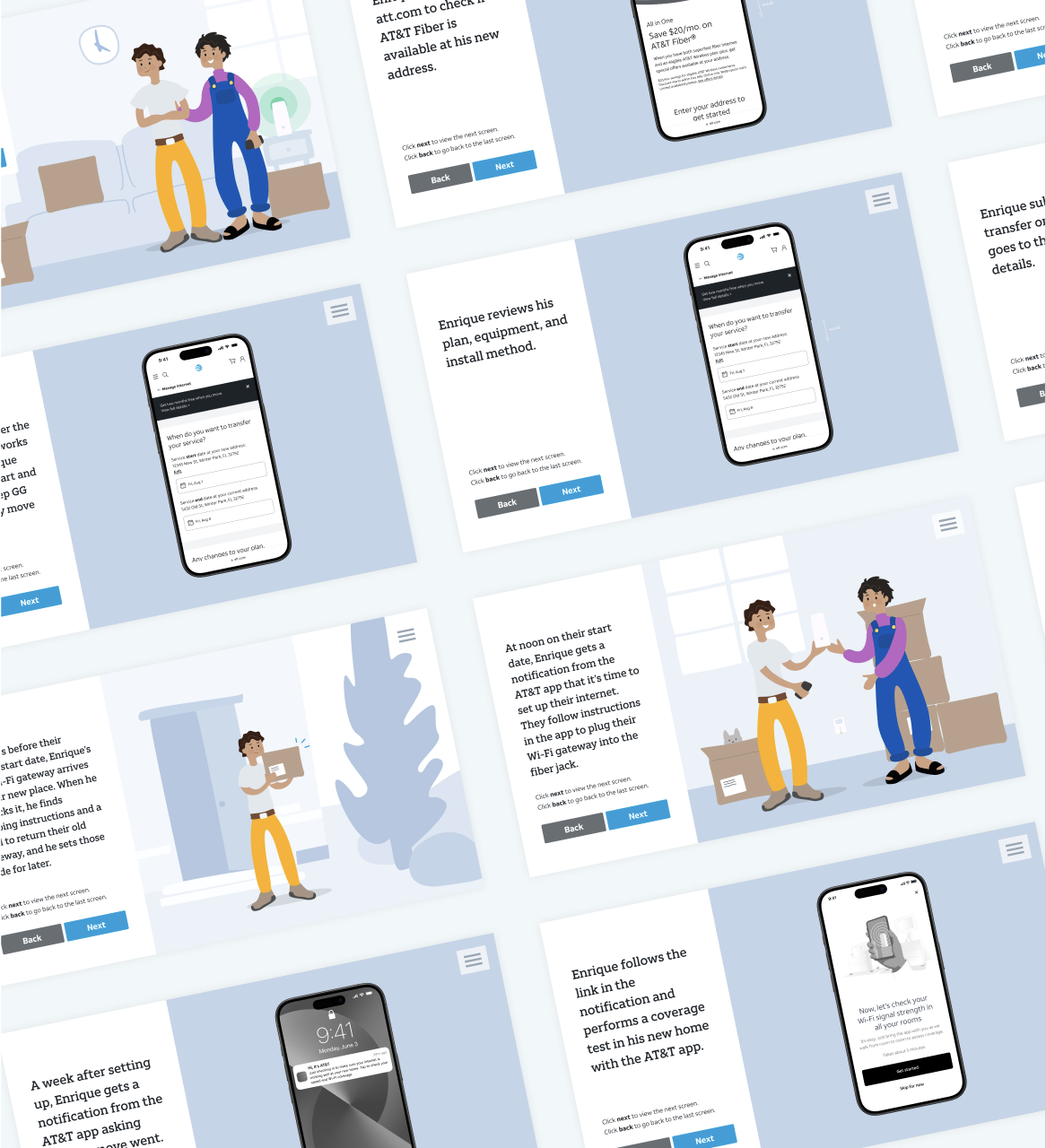
A large number of AT&T fiber Internet customers were canceling their service during (or soon after) moving to new homes — even when moving within our footprint. But inconsistent move processes across and within channels meant our data couldn't tell us exactly how many movers churn or why.
We did, however, have an idea of where to start looking. At the time, AT&T was the only major Internet service provider without an online, self-service option for our movers. All Internet move orders went through call centers, which were inefficient, tedious, and time-consuming for both employees and customers.
Leverage discovery research, stakeholder feedback, and user testing to discover why fiber Internet customers are leaving AT&T
Design the movers experience that helps them stay
Perfect the design handoff to downstream technical teams
A look at how I used content design to ensure the team's efforts were customer-centric, usable, and aligned with AT&T's strategy and business goals.
We had a general understanding of our movers from stakeholders and existing research, but I knew we needed more. I combed through message boards, FAQs, and customer complaints to learn more about what customers were actually experiencing and saying.
It's a little nerdy, but I used Grice's theory of Conversational Maxims to guide a conversational analysis of my findings. I synthesized the information with a sketch of a conversational journey that mapped customer thought processes around moving. This activity surfaced risks, gaps in AT&T's customer communications, and opportunities for the experience design.
The conversational analysis revealed information that became integral to understanding what a better experience could look like. The team used the findings to shape and inform discovery research, prototype development, concept testing, user enablement statements, and recommendations for customer communications.
Multiple teams had vested (and sometimes conflicting) interests in what the target experience looked like. Our team also struggled to articulate the value and necessity of our design choices to our stakeholders and downstream technical partners. To address these issues, I structured our presentations, executive summary, and handoff workshops to create buy-in and follow-through across teams.
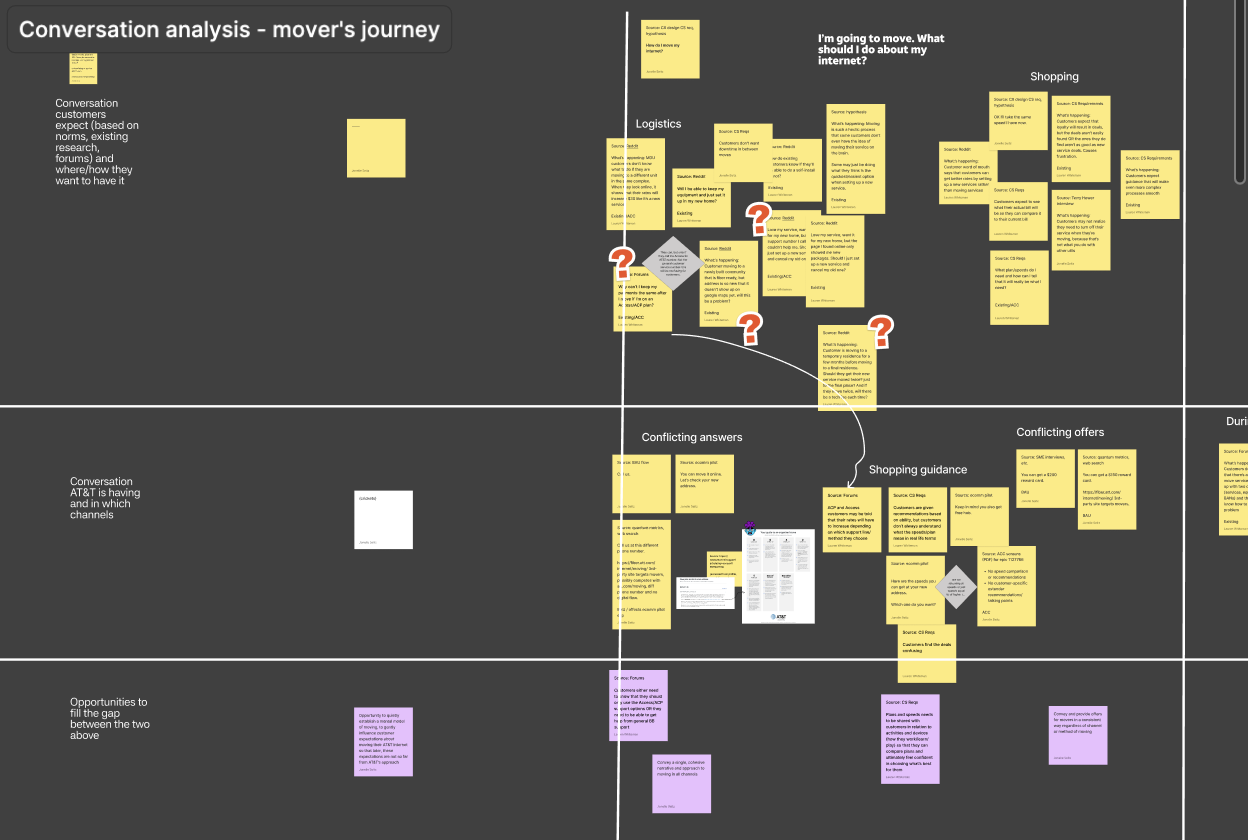
Issues that influence churn fall into five main categories:
When trade-offs got tough, these were the tie-breakers.
A consistent movers process will help us identify customers as either movers or churners instead of conflating the two. It's also a key opportunity to ensure we capture and maintain person- and household-level data. Cleaner data will help us:
Based on our research findings and insights from the conversational analysis, I worked with our UX designers to develop the user flow across four key moments we identified as make-or-break points in the experience. These key moments were refined by customer and front-line employee feedback.
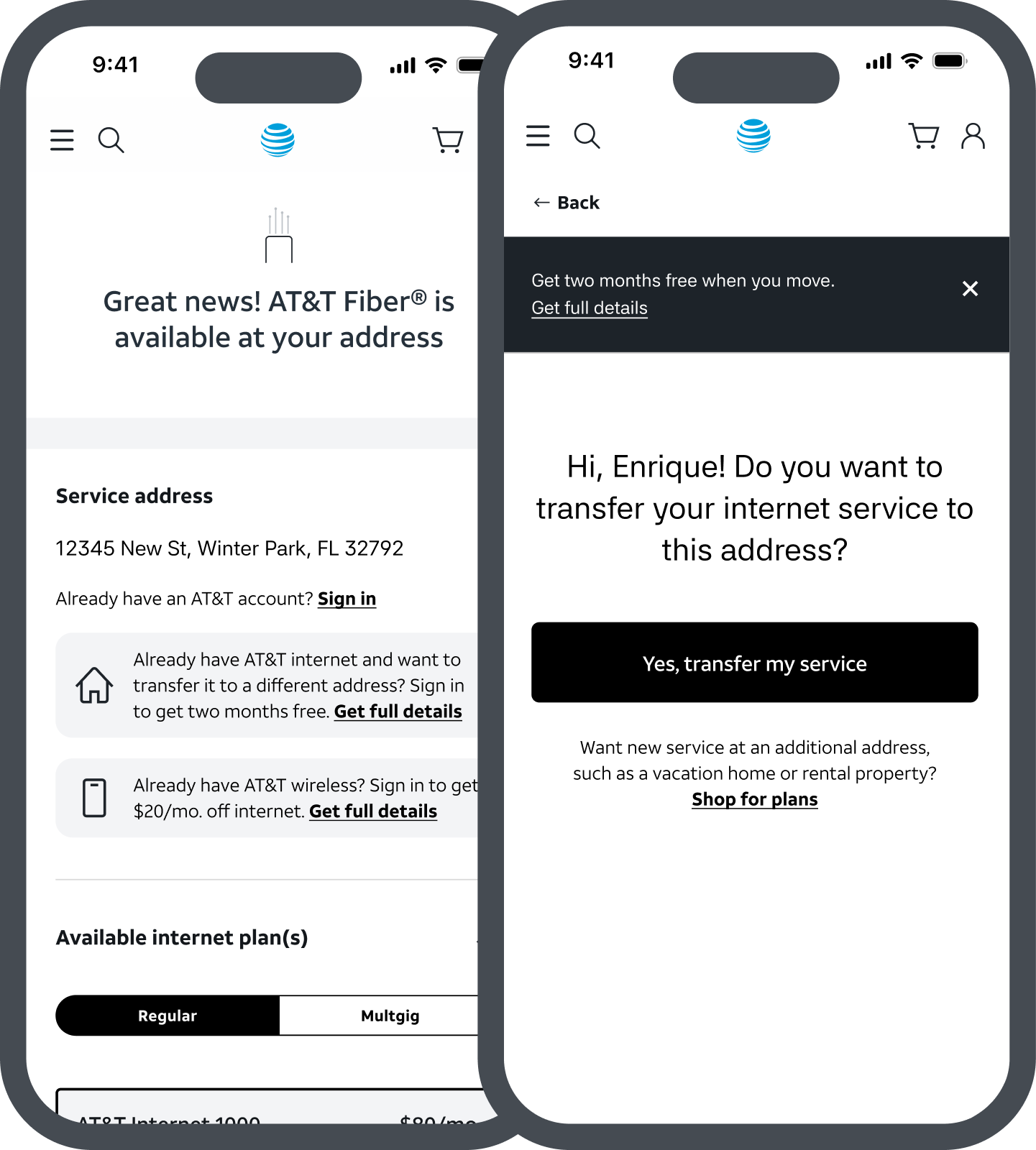
Movers start their journey from various entry points. To eliminate churn and improve the accuracy of our data, we need to meet them where they are, convey the value of staying with AT&T, compel them to sign in, and guide them to transfer their service. An intelligent flow leverages data (such as IP recognition and moving-related cookies and search activity) to anticipate moving intent when customers aren't signed in.
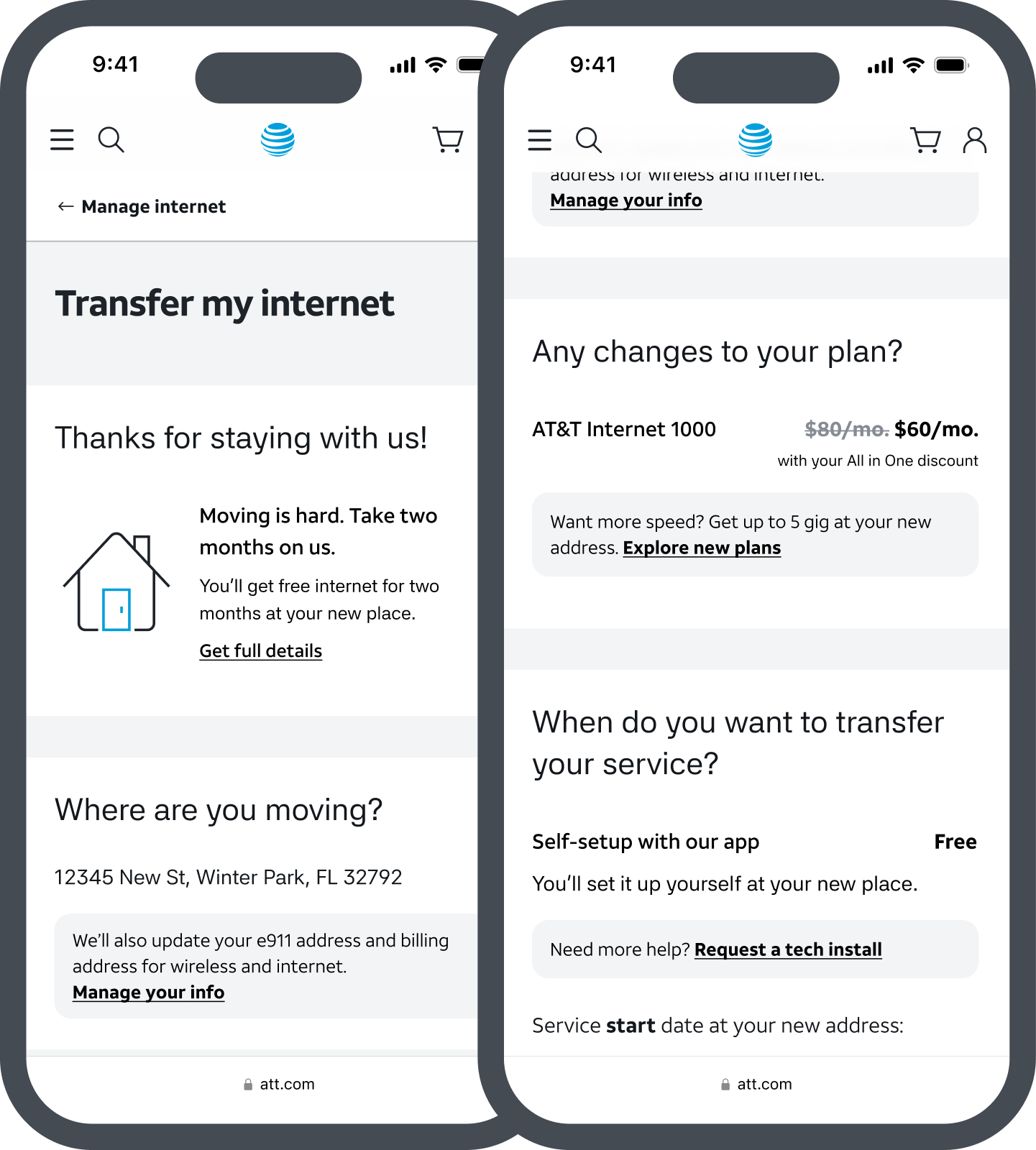
To reduce cognitive load, we don't put movers through a buy flow. Instead, movers order their internet transfer as part of the "manage" experience. We ask only for the info we need to process the transfer. Other changes are optional, and we talk about them in a way that's relevant to movers. We automatically associate a mover's service at their new address with their existing identity, and update their profile and wireless service information to improve our data quality.
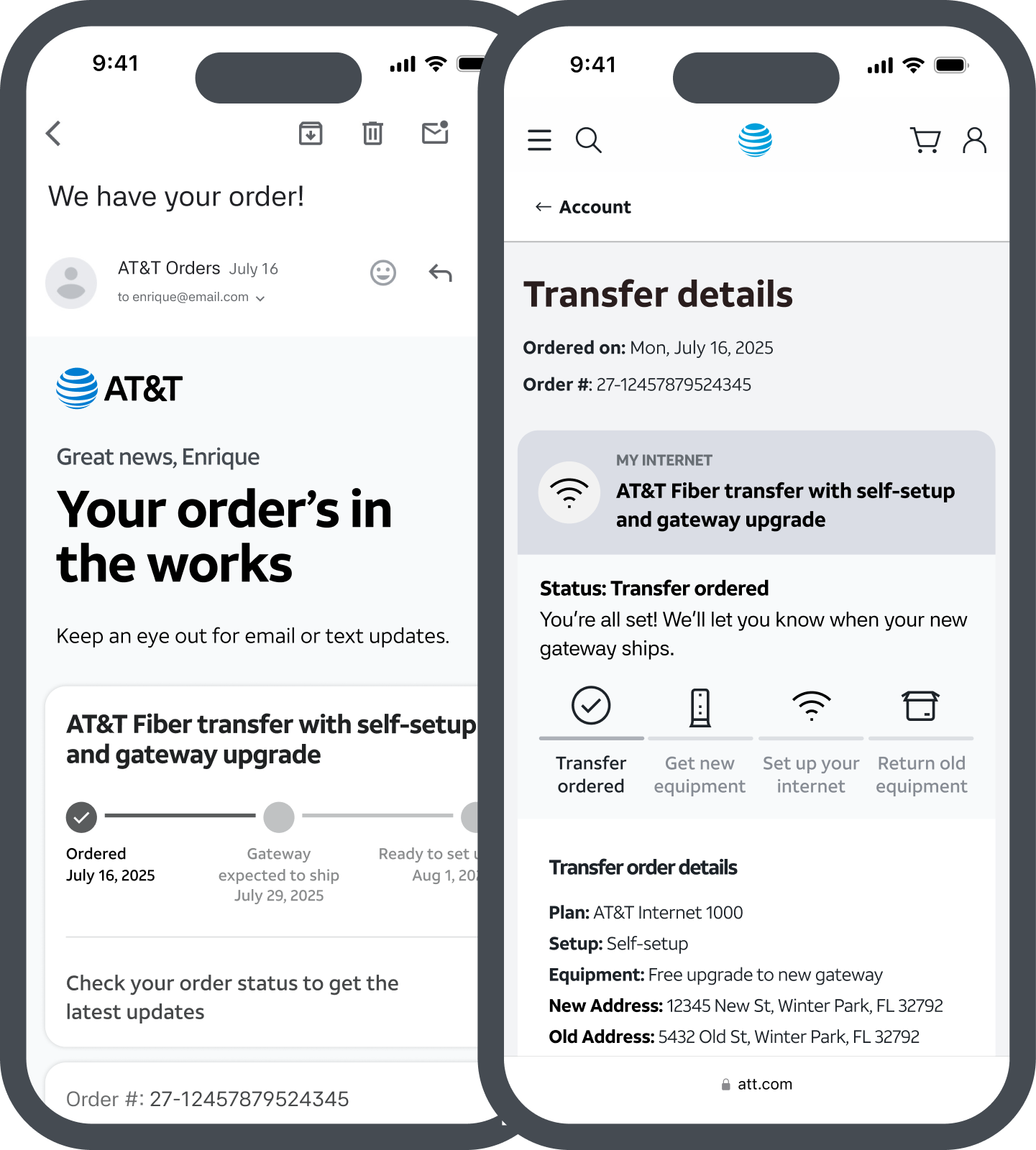
The order confirmation email has a mover-specific variant that confirms the transfer dates and addresses, relevant shipping and installation info, and high-level next steps. Links in the email point to the order management hub for full details and status updates. The hub includes all the details movers need, so they can access them at any time during the hectic move process. Action items, such as downloading the app, are clearly stated so busy movers can't miss them.
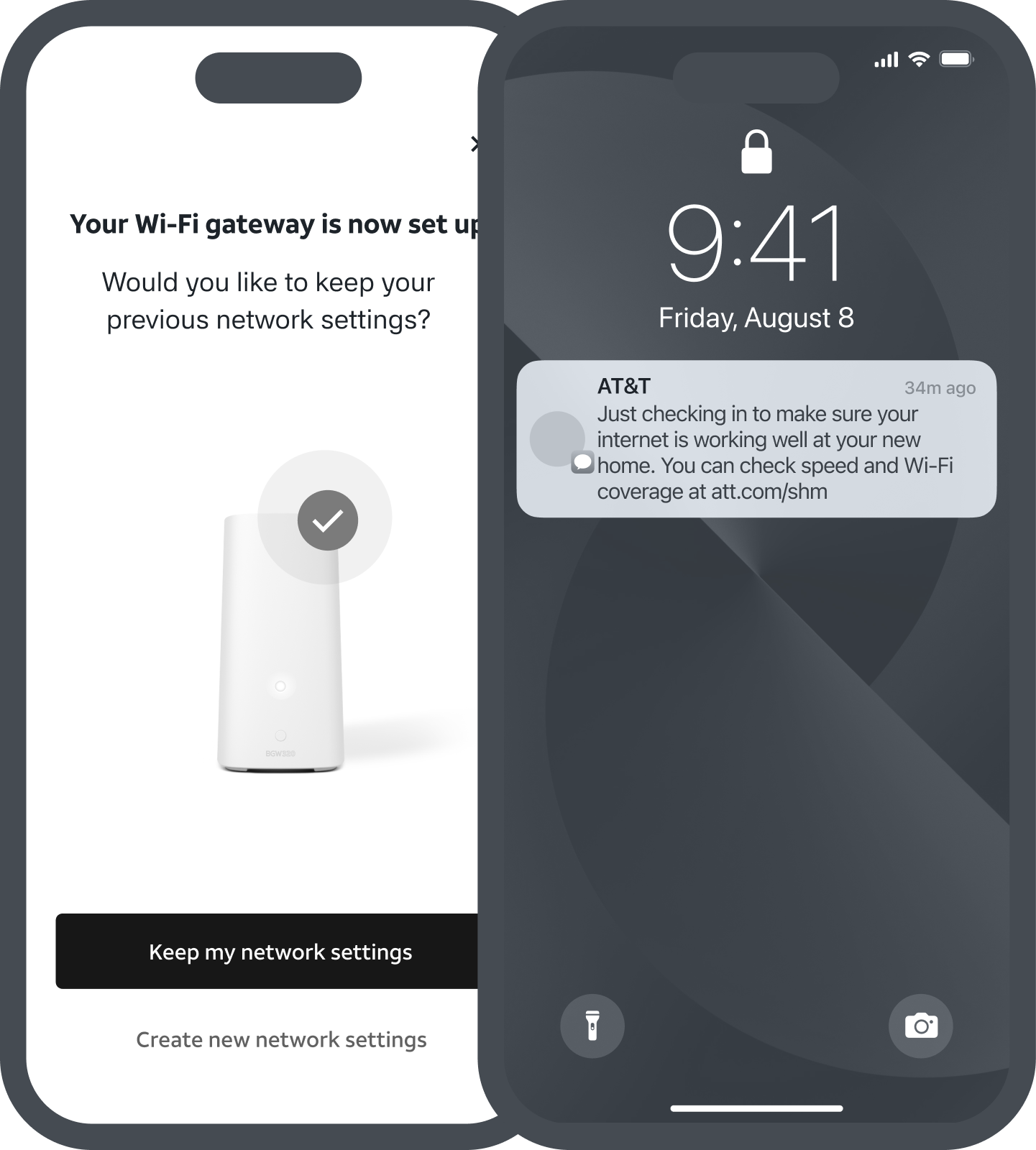
Since we recognize movers as existing customers and add service at their new address to their existing identity, movers get helpful functionality like keeping their network settings. Sometimes problems aren't noticeable at first in a new home, so we proactively check in a few days after activation. A message sent according to customer preferences and app activity drives customers to self-service tools in the app. At this moment, we present call and live chat channels, offering assurance and intercepting dissatisfaction before customers churn.
As I developed content for the prototype, I also supported my colleagues in creating a journey map, Jobs-to-be-Done, and user enablement statements to guide our downstream technology teams. After finalizing our designs, I led workshops with stakeholders and representatives from AT&T's e-commerce product teams to integrate the statements into their product roadmaps.
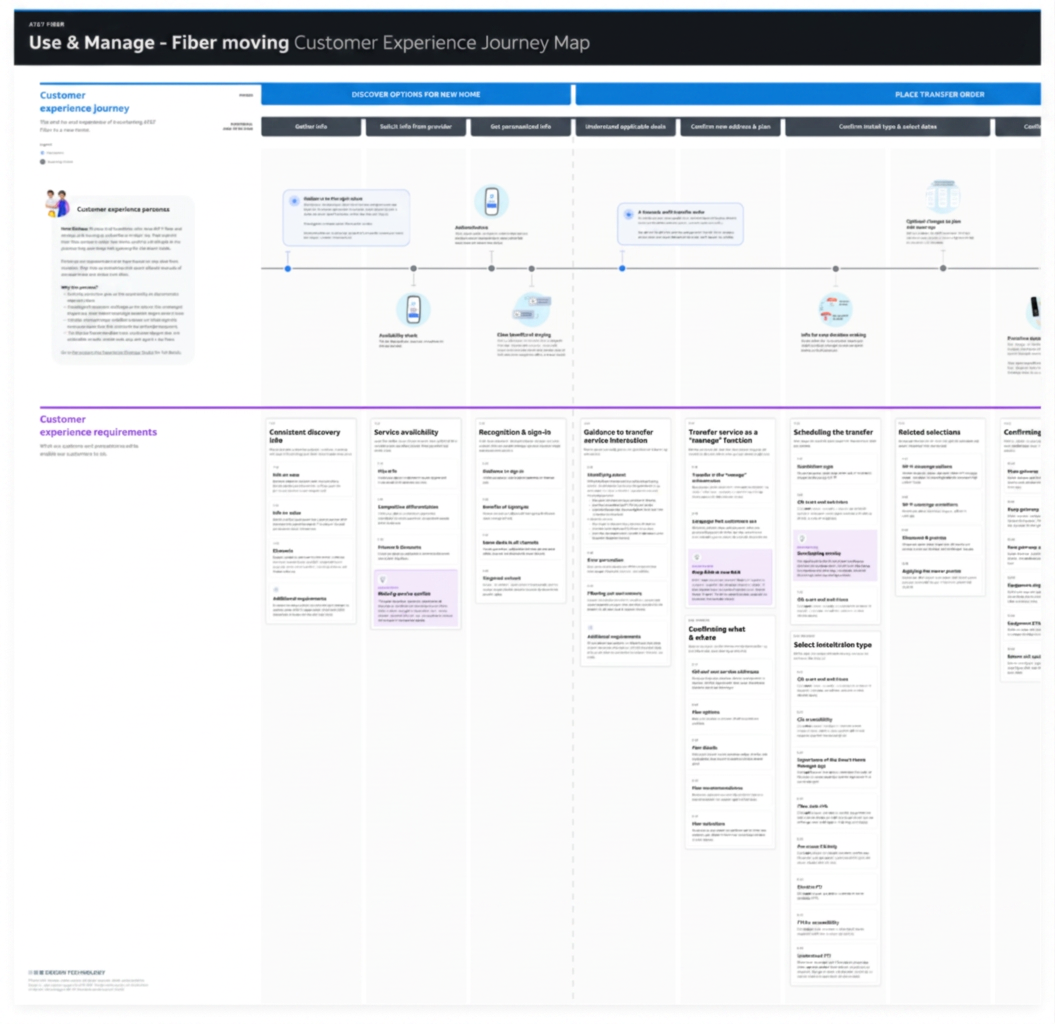
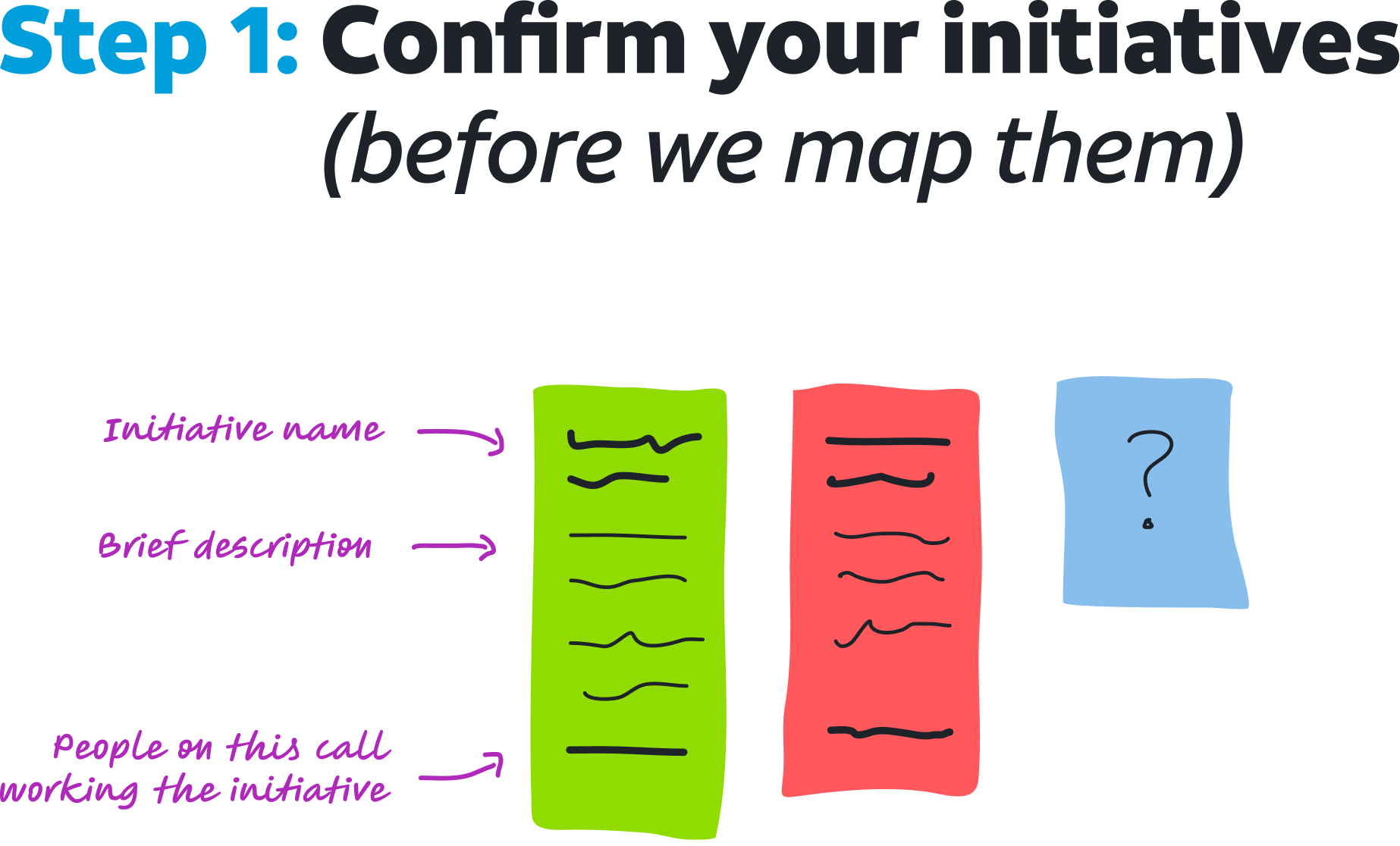
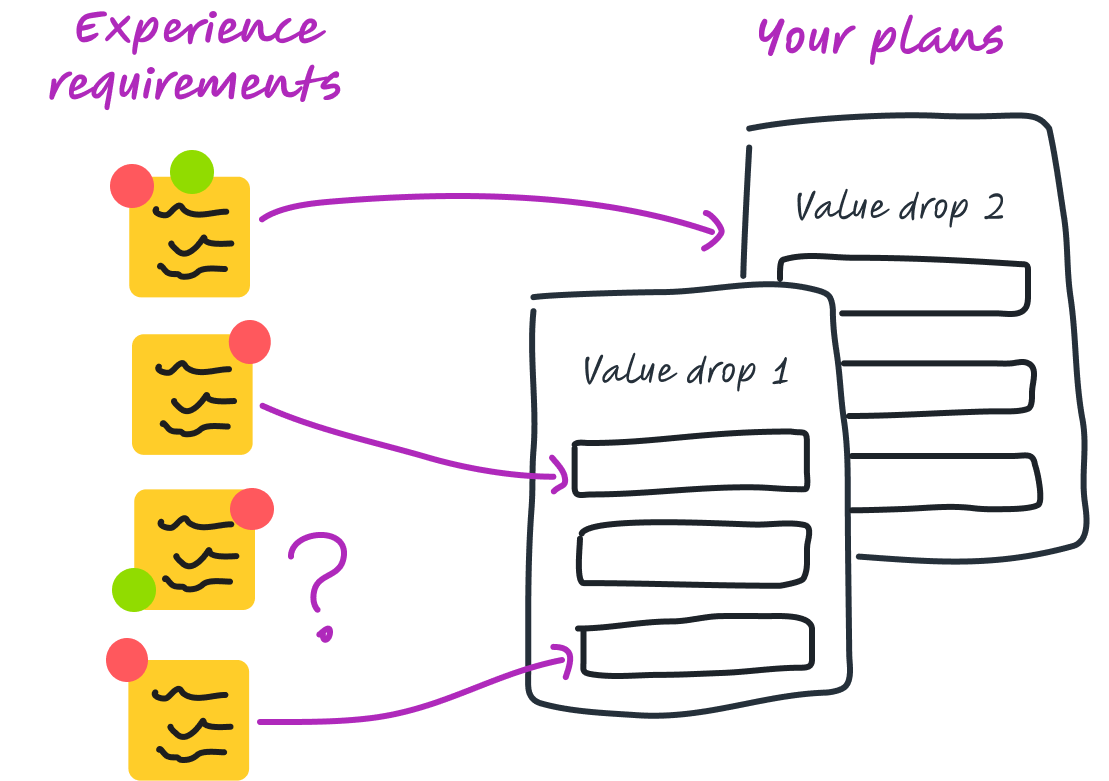
Making sure we had full visibility into all movers' initiatives across the country was important at a company as large as AT&T. Activities like these helped us work with product owners to integrate our recommendations into their roadmaps and properly combine them with the work of other teams.
Our movers experience launched in May of 2025 and helped AT&T align disparate policies and processes. It's the first digital solution for processing broadband move requests in AT&T's 150-year history, putting us in a great position to challenge our competitors. Most importantly, AT&T customers now have greater control and flexibility to move or cancel their broadband service online, ensuring a seamless, transparent experience tailored to their needs.
Due to reduced churn and cleaner mover data
Due to lower customer call volume
Integrated into product roadmaps
“It was stunning how you all made the process, storyboard, testing, and implications so clear for our partners while also not stumbling across each other or fighting to get a word in. There were something like 40+ people on the live meeting, and they were on the edge of their seats.”